
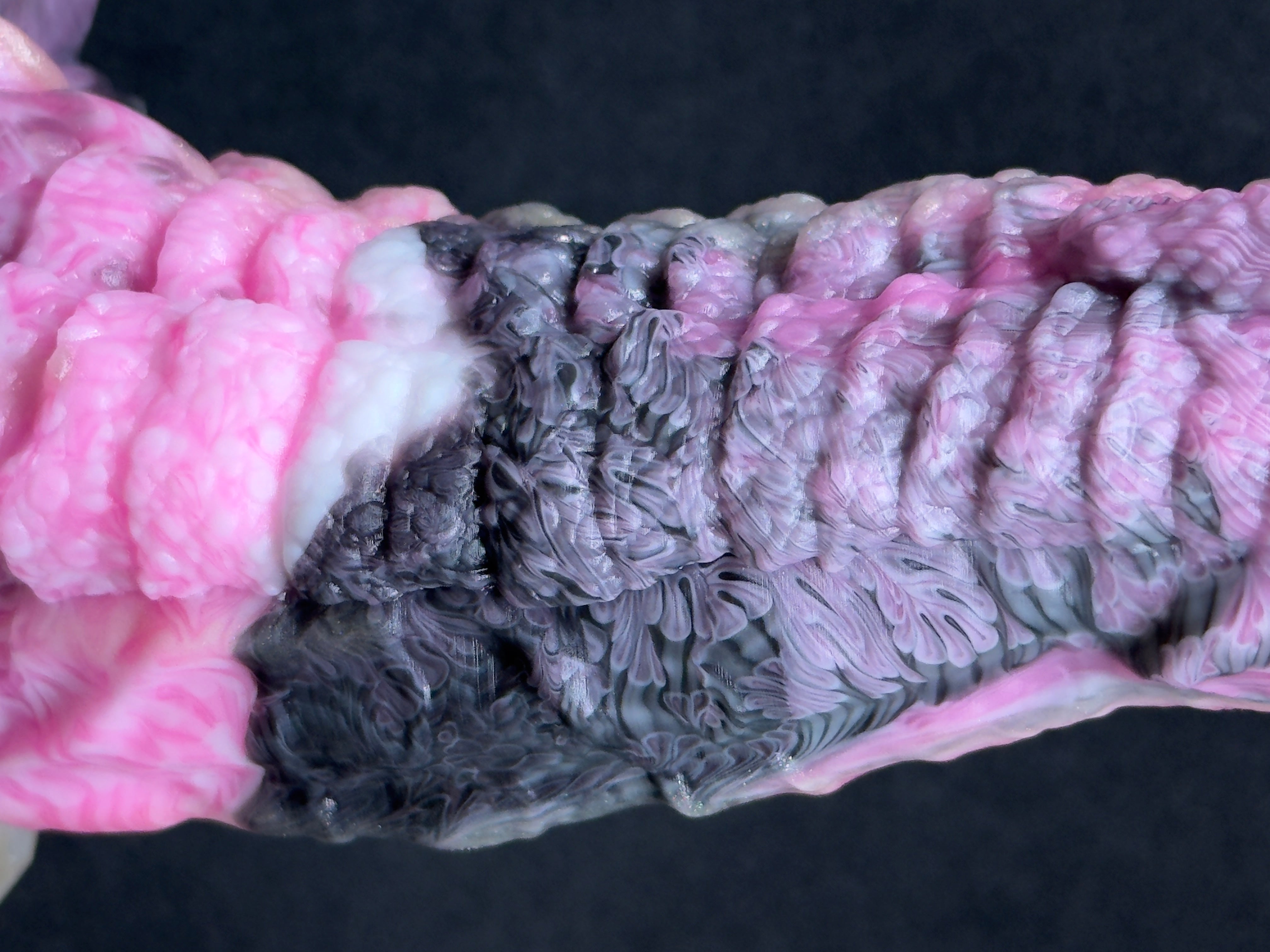
At first glance, two toys can look identical: both are red, both are soft and both do the same job. But one costs €20 and the other €80. Why?
Many people think it's just branding, but the truth lies in the chemistry. At ClimaxLab we believe it's vital that you know what you're putting into your body. So today we'll explain, in simple terms, the battle between Platinum Silicone (what we use) and "low cost" materials.
1. TPE and PVC: The pore problem
Most budget toys are made from blends of plastics and rubbers (TPE/TPR or PVC). They're still manufactured for one reason only: they're dirt cheap to make.
The problem: The sponge analogy
Even though they feel smooth to the touch, under a microscope these materials are like a sponge. They have thousands of invisible pores.
- Hygiene: Fluids and bacteria get trapped in those pores. No matter how much you wash the toy, it's very hard to clean what has soaked "into" the material.
- The chemicals: To make that plastic soft, softening oils are added. Over time, these oils rise to the surface (that's why they sometimes smell strongly of rubber or turn sticky if you leave them in a drawer for a long time).

2. Platinum Silicone: Like glass, but flexible
Silicone is not a plastic; it comes from silicon (like sand or glass). In our workshop we exclusively use Platinum-Cure Silicone.
What does this mean? For liquid silicone to harden, it needs an ingredient that activates the reaction.
💡 Artisan's Fact: Platinum silicone is expensive because the catalyst (platinum) is a precious metal. But it's the only way to guarantee that what you put into your body is 100% safe.
Why is it safer?
- Sealed Surface: Unlike TPE, platinum silicone has no pores. It's like glass: nothing can get into it. Bacteria stay on the surface and wash away with simple soap and water.
- It takes the heat: Cheap plastic melts if you heat it. Platinum silicone withstands over 200°C. That means you can boil your toys in a pot for 5 minutes to sterilise them completely, just like baby bottles or medical equipment.
- It's inert: It doesn't react with your body or release substances over time. It's hypoallergenic and will last for years just like on day one.
3. How to tell them apart at home?
If you have toys and don't know what material they're made of, try these simple tests:
-
The memory test: Dig your nail in or stretch the toy.
- If the mark stays for a while or it takes time to recover its shape, it's usually TPE/PVC (cheap material).
- If it snaps back to its shape instantly and firmly, it's Silicone. It has "memory"; it always wants to return to its original state.
- The touch test: If after washing and drying it you notice it still feels somewhat greasy or sticky, it's likely a porous material leaching plasticisers. Clean silicone feels dry and smooth.
Conclusion: An investment in peace of mind
Choosing Platinum Silicone isn't a luxury; it's basic hygiene.
While porous materials degrade and are hard to disinfect thoroughly, a ClimaxLab piece is a safe, durable tool. We'd rather explain why our materials cost more than sell you something we wouldn't use ourselves.
Since you're investing in quality silicone, learn how to care for it so it lasts a lifetime.

Share:
An Introduction to Soft BDSM: How to Start Without Running Away
Survival Manual: How to Clean and Care for Your Silicone Toys