
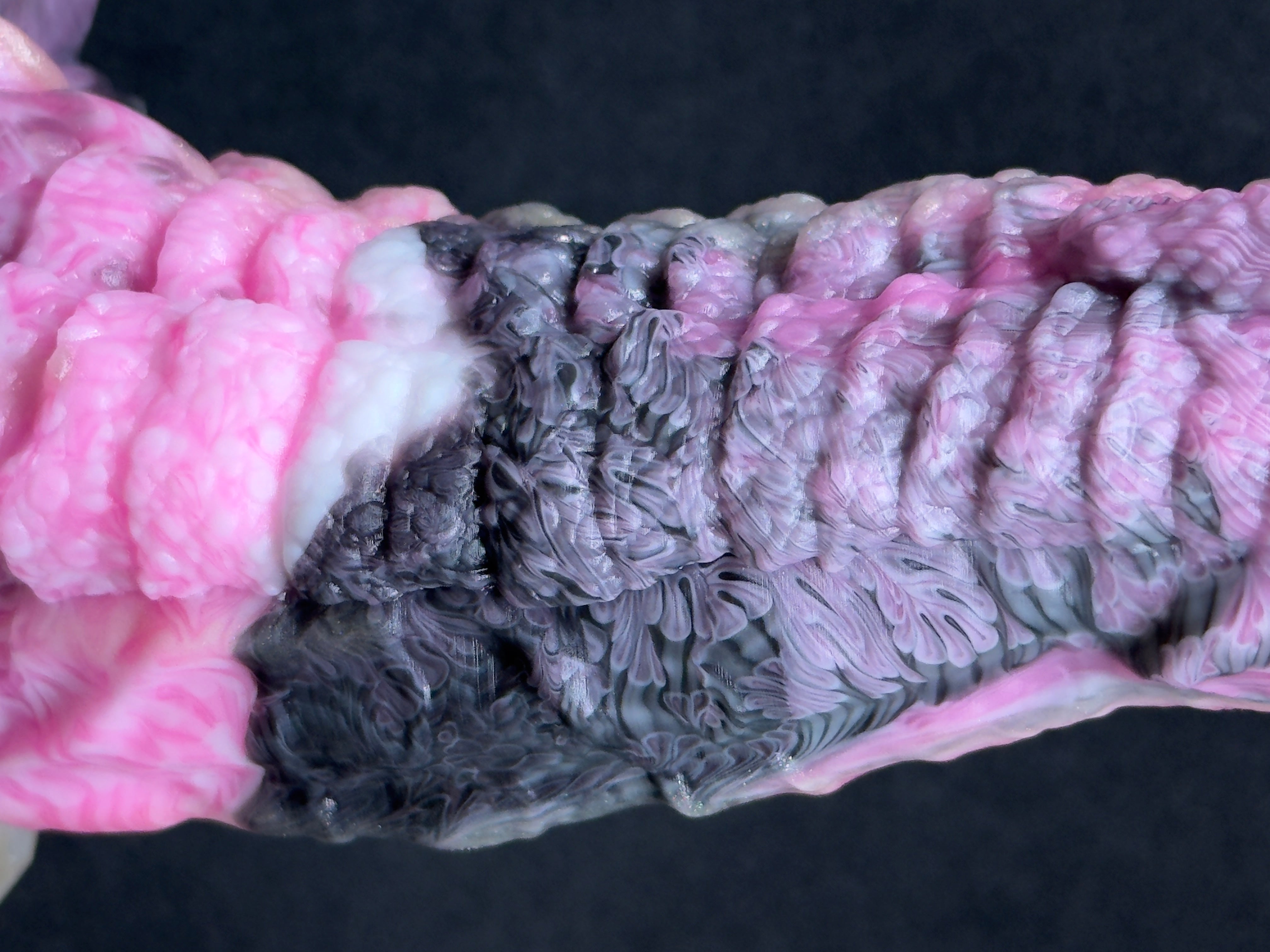
À première vue, deux jouets peuvent sembler identiques : les deux sont rouges, les deux sont souples et les deux servent à la même chose. Mais l'un coûte 20 € et l'autre 80 €. Pourquoi ?
Beaucoup pensent que c'est juste la marque, mais la réalité est dans la chimie. Chez ClimaxLab, nous croyons qu'il est vital que tu saches ce que tu mets dans ton corps. Alors aujourd'hui, on t'explique simplement la bataille entre le silicone platine (ce que nous utilisons) et les matériaux « low cost ».
1. TPE et PVC : le problème des pores
La plupart des jouets bon marché sont faits de mélanges de plastiques et de gommes (TPE/TPR ou PVC). On continue à les fabriquer pour une seule raison : ils sont ultra bon marché à produire.
Le problème : l'analogie de l'éponge
Même s'ils semblent lisses au toucher, sous un microscope ces matériaux sont comme une éponge. Ils ont des milliers de pores invisibles.
- Hygiène : Dans ces pores restent piégés fluides et bactéries. Tu peux laver le jouet autant que tu veux, il est très difficile de nettoyer ce qui s'est infiltré « dans » le matériau.
- Les produits chimiques : Pour que ce plastique soit souple, on lui ajoute des huiles assouplissantes. Avec le temps, ces huiles remontent à la surface (c'est pour ça qu'ils sentent parfois fort le caoutchouc ou deviennent collants si tu les laisses longtemps dans un tiroir).

2. Silicone platine : comme le verre, mais flexible
Le silicone n'est pas un plastique, il provient du silicium (comme le sable ou le verre). Dans notre atelier, nous utilisons exclusivement du silicone à réticulation platine.
Qu'est-ce que ça veut dire ? Pour que le silicone liquide durcisse, il a besoin d'un ingrédient qui active la réaction.
💡 Info de l'artisan : Le silicone platine est cher parce que le catalyseur (le platine) est un métal précieux. Mais c'est la seule façon de garantir que ce que tu mets dans ton corps est 100 % sûr.
Pourquoi est-il plus sûr ?
- Surface scellée : Contrairement au TPE, le silicone platine n'a pas de pores. C'est comme le verre : rien ne peut y pénétrer. Les bactéries restent en surface et partent avec un simple lavage à l'eau et au savon.
- Il supporte la chaleur : Le plastique bon marché fond si tu le chauffes. Le silicone platine supporte plus de 200 °C. Ça veut dire que tu peux faire bouillir tes jouets dans une casserole pendant 5 minutes pour les stériliser totalement, comme on le fait avec les biberons ou le matériel médical.
- Il est inerte : Il ne réagit pas avec ton corps et ne libère pas de substances avec le temps. Il est hypoallergénique et durera des années comme au premier jour.
3. Comment les distinguer chez toi ?
Si tu as des jouets et que tu ne sais pas en quel matériau ils sont, fais ces tests simples :
-
Le test de la mémoire : Enfonce l'ongle ou étire le jouet.
- Si la marque reste un moment ou s'il met du temps à retrouver sa forme, c'est généralement du TPE/PVC (matériau bon marché).
- S'il retrouve sa forme instantanément et avec force, c'est du silicone. Il a de la « mémoire », il veut toujours revenir à son état d'origine.
- Le test du toucher : Si après l'avoir lavé et séché tu remarques qu'il garde un toucher un peu gras ou collant, c'est probablement un matériau poreux qui relâche des plastifiants. Le silicone propre est sec et doux au toucher.
Conclusion : un investissement en tranquillité
Choisir le silicone platine n'est pas un luxe, c'est de l'hygiène de base.
Alors que les matériaux poreux se dégradent et sont difficiles à désinfecter à fond, une pièce ClimaxLab est un outil sûr et durable. Nous préférons t'expliquer pourquoi nos matériaux coûtent plus cher, plutôt que de te vendre quelque chose que nous n'utiliserions pas nous-mêmes.
Puisque tu investis dans du silicone de qualité, apprends à en prendre soin pour qu'il te dure toute la vie.

Partager:
Introduction au BDSM Doux : Comment commencer sans prendre la fuite
Manuel de survie : comment nettoyer et entretenir tes jouets en silicone